Pragmatic Observability

Pragmatic Observability and how to achieve optimal observability while managing costs.

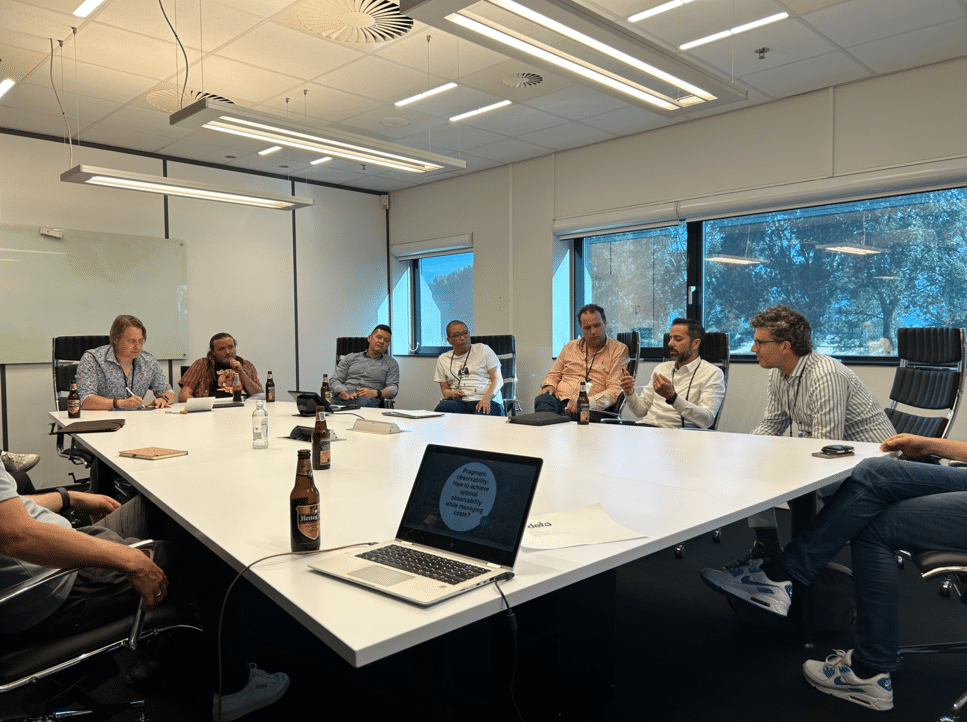
On Thursday 20th of July Third Republic partnered up again with Irdeto to host our latest CTO roundtable series at their offices in Hoofddorp. With a group of experienced leaders we discussed Pragmatic Observability and how to achieve optimal observability while managing costs. Below is the summary which captures the key points of the discussion…

Title: Observability with Purpose: Achieving Optimal Visibility While Safeguarding Your Budget

In the ever-evolving landscape of technology, observability has emerged as a pivotal practice for businesses seeking to gain deeper insights into their complex systems, improve incident response times, and make informed decisions based on real-time data. The significance of observability in today’s tech-driven world cannot be overstated, but many organizations struggle with the challenge of striking the right balance between achieving optimal observability and managing costs efficiently.

To discuss this critical topic, industry experts and thought leaders recently gathered for a thought-provoking roundtable titled “Pragmatic Observability: Achieving Optimal Observability While Managing Costs.” With active discussions during the event the participants came up with valuable insights and strategies for businesses to harness the power of observability without burdening their budgets.

Observability with Purpose: Aligning with Business Needs

The foundation of pragmatic observability lies in aligning its implementation with the specific business needs. Observability should never be pursued simply for the sake of it or because it’s trendy. Instead, it should be thoughtfully employed to resolve real business challenges and contribute tangibly to revenue generation. By focusing on monitoring metrics that directly impact business outcomes and customer experience, organizations can ensure that their observability efforts are purpose-driven and budget-friendly.

Choosing the Right Data and Tools

The world of observability offers plenty of options, each serving their unique purpose in providing visibility into different aspects of a system. From logging and metrics to tracing, APM, and gathering events, selecting the right mix becomes crucial to meet the organization’s specific use-cases and objectives. Moreover, various teams within the organization may require distinct insights, requiring a thoughtful approach that balances short-term data for incident resolution and long-term data for trend analysis and forecasting.

Starting Small and Thinking Lean

Embarking on the observability journey doesn’t need to be an overwhelming endeavor. Starting small and thinking lean are essential strategies to manage costs effectively. By beginning with tools provided by observability vendors and gradually scaling up based on actual business needs, organizations can avoid unnecessary expenses and prevent over-engineering. Additionally, focusing on the most essential and impactful metrics ensures that observability efforts are both streamlined and actionable.

Collaboration and Integration with Development Teams

Observability should not be relegated solely to the realm of operations, platform, DevOps or SRE. Instead, it needs to be seamlessly integrated into the product development lifecycle. Close collaboration with development teams from the early stages of product ideation and design is essential to ensure observability becomes an integral part of the product’s DNA. By fostering a shared understanding of approach to observability, teams can collectively drive better products, enhanced reliability, and improved customer experiences.

Measuring Business Impact: From Data to Decisions

Metrics play a crucial role in making observability meaningful and impactful. To justify observability efforts and demonstrate their value, organizations must connect metrics to business objectives and revenue generation. By using DORA metrics along with availability and developer experience measurements, businesses can quantify their overall performance. This data-driven approach not only aids in informed decision-making, but also helps organizations prioritize the right initiatives based on their potential business outcomes.

Conclusion: Embrace Pragmatic Observability for Optimal Success

As businesses navigate the complexities of a technology-driven world, observability emerges as a powerful ally to gain valuable insights, enhance system reliability, and drive business growth. Achieving optimal observability while managing costs is not an insurmountable challenge. It requires strategic planning, informed choices, and a commitment to aligning observability with business needs.

By embracing observability, organizations can unlock the full potential of their systems, empower their teams to respond proactively to challenges, and ensure a seamless customer experience. In a world where data drives innovation and success, observability with purpose should become the integral part of any thriving business, helping to achieve reliability, resilience and success.

If you enjoyed this write up and are interested in these types of roundtables, please get in touch with the host Adam Elliott-Smith on 0044 751 833 8163


More Insights

Benjamin Hanrieder

Q&A Benjamin Hanrieder (CTO, Engel & Volkers)

In this interview, Benjamin Hanrieder, CTO at Engel & Völkers Technology, discusses the company’s digital transformation, software development practices, and the role of the Cloud Platform Team in ensuring reliable and secure infrastructure. Mat Roche (MR): Can you give us an overview of your background?  Benjamin Hanrieder (BH):  Hi Mat,

Read more >
TechQA series, Mat Roche

Q&A: Adrian Hupa (Head of Engineering at Scalable Capital)

In the latest of our #TechQA series, Mat Roche, Co-Founder of Third Republic talks to Andrian Hupa -Head of Engineering at Scalable Capital. In this extensive session, Adrian discusses his background and reasons for joining the company, common mistakes made during the hiring process and the tech slowdown. MR: Can you

Read more >

Get In Touch

Fill out the form below, and we will be in touch shortly.

Seniority

Software Developers
Senior Engineers
Software Architects
Senior Software Architects
Software Tech Leads
Senior Software Tech Leads
Software Tech Lead Managers
Senior Software Tech Lead Managers
Director of Engineering
VP of Engineering


Software Developers
Senior Engineers
Software Architects
Senior Software Architects
Software Tech Leads
Senior Software Tech Leads
Software Tech Lead Managers
Senior Software Tech Lead Managers
Director of Engineering
VP of Engineering


Software Developers
Senior Engineers
Software Architects
Senior Software Architects
Software Tech Leads
Senior Software Tech Leads
Software Tech Lead Managers
Senior Software Tech Lead Managers
Director of Engineering
VP of Engineering


Role

Full-stack Developers
Back-end Developers
Front-end Developers
DevOps Engineers
SRE Engineers
Cloud Engineers
Platform Engineer
Security Engineers
Mobile Developers
App Developers
No1 software engineers

Full-stack Developers
Back-end Developers
Front-end Developers
DevOps Engineers
SRE Engineers
Cloud Engineers
Platform Engineer
Security Engineers
Mobile Developers
App Developers
No1 software engineers

Full-stack Developers
Back-end Developers
Front-end Developers
DevOps Engineers
SRE Engineers
Cloud Engineers
Platform Engineer
Security Engineers
Mobile Developers
App Developers
No1 software engineers

Skills

React.js
Node.js
AWS
JavaScript
React
Native
PostgreSQL
Ruby on Rails
Java
Angular
Golang
PHP

React.js
Node.js
AWS
JavaScript
React
Native
PostgreSQL
Ruby on Rails
Java
Angular
Golang
PHP

React.js
Node.js
AWS
JavaScript
React
Native
PostgreSQL
Ruby on Rails
Java
Angular
Golang
PHP

Sample By Job Family

Data Scientists
Data Engineers
Data Architects
Data Modelers
BI Developers
Data Analysts
Data Quality Engineers
Data Governance Experts MLOps Engineers
DataOps Engineers
Data Product Managers
Executive Data Leadership

Data Scientists
Data Engineers
Data Architects
Data Modelers
BI Developers
Data Analysts
Data Quality Engineers
Data Governance Experts MLOps Engineers
DataOps Engineers
Data Product Managers
Executive Data Leadership

Sample of Platforms & Tools

Cloud DW: Snowflake, BigQuery, Redshift ETL/ELT Tools: Airflow, dbt, Fivetran, Talend Big Data Frameworks: Spark, Hadoop, Kafka BI & Visualization: Tableau, Power BI, Looker ML Libraries: TensorFlow, PyTorch, Scikit MLOps Platforms: MLflow, Kubeflow, W&B Data Governance: Collibra, Alation Data Observability: Monte Carlo, Databand Data Lakes: Lake Formation, Delta Lake SQL/NoSQL DBs: PostgreSQL, MongoDB Real-time Analytics DBs: Apache Pinot, Druid Gen

Cloud DW: Snowflake, BigQuery, Redshift ETL/ELT Tools: Airflow, dbt, Fivetran, Talend Big Data Frameworks: Spark, Hadoop, Kafka BI & Visualization: Tableau, Power BI, Looker ML Libraries: TensorFlow, PyTorch, Scikit MLOps Platforms: MLflow, Kubeflow, W&B Data Governance: Collibra, Alation Data Observability: Monte Carlo, Databand Data Lakes: Lake Formation, Delta Lake SQL/NoSQL DBs: PostgreSQL, MongoDB Real-time Analytics DBs: Apache Pinot, Druid Gen

Sample of Skills Delivered

Programming in Python, R, and SQL
Python
Data Modeling Statistical
Analysis ETL/ELT
Pipeline Development
Database Design & Administration
Machine Learning Fundamentals
Cloud Data Warehousing
Data Ethics & Compliance
Data Security
Data Visualization & Storytelling
Real-Time Data Streaming

Programming in Python, R, and SQL
Python
Data Modeling Statistical
Analysis ETL/ELT
Pipeline Development
Database Design & Administration
Machine Learning Fundamentals
Cloud Data Warehousing
Data Ethics & Compliance
Data Security
Data Visualization & Storytelling
Real-Time Data Streaming

Sample By Job Family

AI Software Engineers
Gen AI Engineers
Machine Learning Engineers
Deep Learning Engineers
Prompt Engineers
AI Research Scientists
NLP Engineers
Computer Vision Engineers
MLOps Engineers
AI Product Managers
AI Governance Specialists
AI Ethics Office
AI Architects Executive

AI Software Engineers
Gen AI Engineers
Machine Learning Engineers
Deep Learning Engineers
Prompt Engineers
AI Research Scientists
NLP Engineers
Computer Vision Engineers
MLOps Engineers
AI Product Managers
AI Governance Specialists
AI Ethics Office
AI Architects Executive

Sample of Platforms & Tools

LLMs: Open AI, Anthropic, Llama, Gemini ML Platforms: SageMaker, Vertex AI, Azure ML ML Libraries: scikit-learn, XGBoost, LightGBM DL Frameworks: TensorFlow, PyTorch, Keras LLM Frameworks: LangChain, LlamaIndex Vector Databases: Pinecone, Weaviate, Milvus Data Science Notebooks: Jupyter, Colab, Kaggle Data Visualization Libraries: Matplotlib, Seaborn NLP Libraries: Hugging Face Transformers CV Libraries: OpenCV, Pillow, Albumentations MLOps Tools: MLflow, Kubeflow, W&B

LLMs: Open AI, Anthropic, Llama, Gemini ML Platforms: SageMaker, Vertex AI, Azure ML ML Libraries: scikit-learn, XGBoost, LightGBM DL Frameworks: TensorFlow, PyTorch, Keras LLM Frameworks: LangChain, LlamaIndex Vector Databases: Pinecone, Weaviate, Milvus Data Science Notebooks: Jupyter, Colab, Kaggle Data Visualization Libraries: Matplotlib, Seaborn NLP Libraries: Hugging Face Transformers CV Libraries: OpenCV, Pillow, Albumentations MLOps Tools: MLflow, Kubeflow, W&B

Sample of Skills Delivered

Generative AI Development
Machine Learning Algorithms
Deep Learning Architectures
NLP and NLG
Computer Vision
Data & Feature Engineering
MLOps & Model Deployment
Statistical Analysis & Hypothesis Testing
Python and R Programming Expertise
Model Evaluation & Performance Tuning
AI Governance & Compliance
Autonomous AI Agent Engineering
Building Agentic AI Applications

Generative AI Development
Machine Learning Algorithms
Deep Learning Architectures
NLP and NLG
Computer Vision
Data & Feature Engineering
MLOps & Model Deployment
Statistical Analysis & Hypothesis Testing
Python and R Programming Expertise
Model Evaluation & Performance Tuning
AI Governance & Compliance
Autonomous AI Agent Engineering
Building Agentic AI Applications